Every restaurant needs a small set of printed pieces that work together: a takeout menu, table tents for specials, a flyer for the neighborhood, a catering menu, window posters, and a card or stand asking for reviews. Before anything goes to print, check the phone number, address, hours, prices and every QR code, and make sure it all matches your menu board and website. Get those basics right before adding anything fancy.
Use this as a checklist for a new opening or a refresh. Start at the top and work down.
The core print set
- 01
Takeout menu
The full menu people take home or find in the delivery bag. Sections in the order people order, clear prices, a large phone number and address, and a QR code for online ordering if you offer it.
- 02
Dine-in menu
If you have table service, a sturdy laminated or heavy card menu that survives being wiped down. Counter-service spots can skip this and let the menu board do the work.
- 03
Table tents
Small and specific: today's combos, a chef's pick, a lunch special, a dessert. One message per side. They sell the add-on while people are sitting down with time to read.
- 04
Lunch special and promo flyers
For the window, the counter and nearby offices. One offer, one strong photo, the days and hours it runs, and how to order.
- 05
Catering menu
A separate menu for trays and large orders, with tray sizes, how far ahead to order and who to call. Offices, schools, community groups and families planning events hold on to these.
- 06
Review and social cards
A counter stand or table tent with a QR code that opens your Google review form, plus your Instagram, Facebook and TikTok handles.
If you are opening a new place, this is the order we would print in: the takeout menu and the review stand first, because you need them from the first day, then table tents and a lunch special flyer once you know which dishes are selling, and the catering menu after that. It is better to print a few pieces well and keep them current than to fill every surface in the dining room at once.
The extras worth having
- Window posters for specials and catering, large enough to read from the sidewalk.
- Door and window decals with your hours, the delivery apps you are on and the payments you take.
- Stickers for takeout bags and boxes with your logo and social handle.
- Business cards for catering and large-order inquiries.
- A sidewalk A-frame sign, if your landlord and local rules allow it.
- Loyalty cards, if you run a program people actually use.
Skip anything you can't keep current. A poster for a special that ended months ago is worse than an empty window, because it tells people nobody is paying attention.
Make everything match
Customers see your print, your menu board, your website and your delivery app listing within minutes of each other. If a platter has one name on the table tent and another on the board, or the price is different, people notice. Keep one master list of dish names, photos and prices, and design every piece from it. Use the same logo, colors and fonts everywhere, so a flyer on a community board in Flatbush is instantly recognizable as yours.
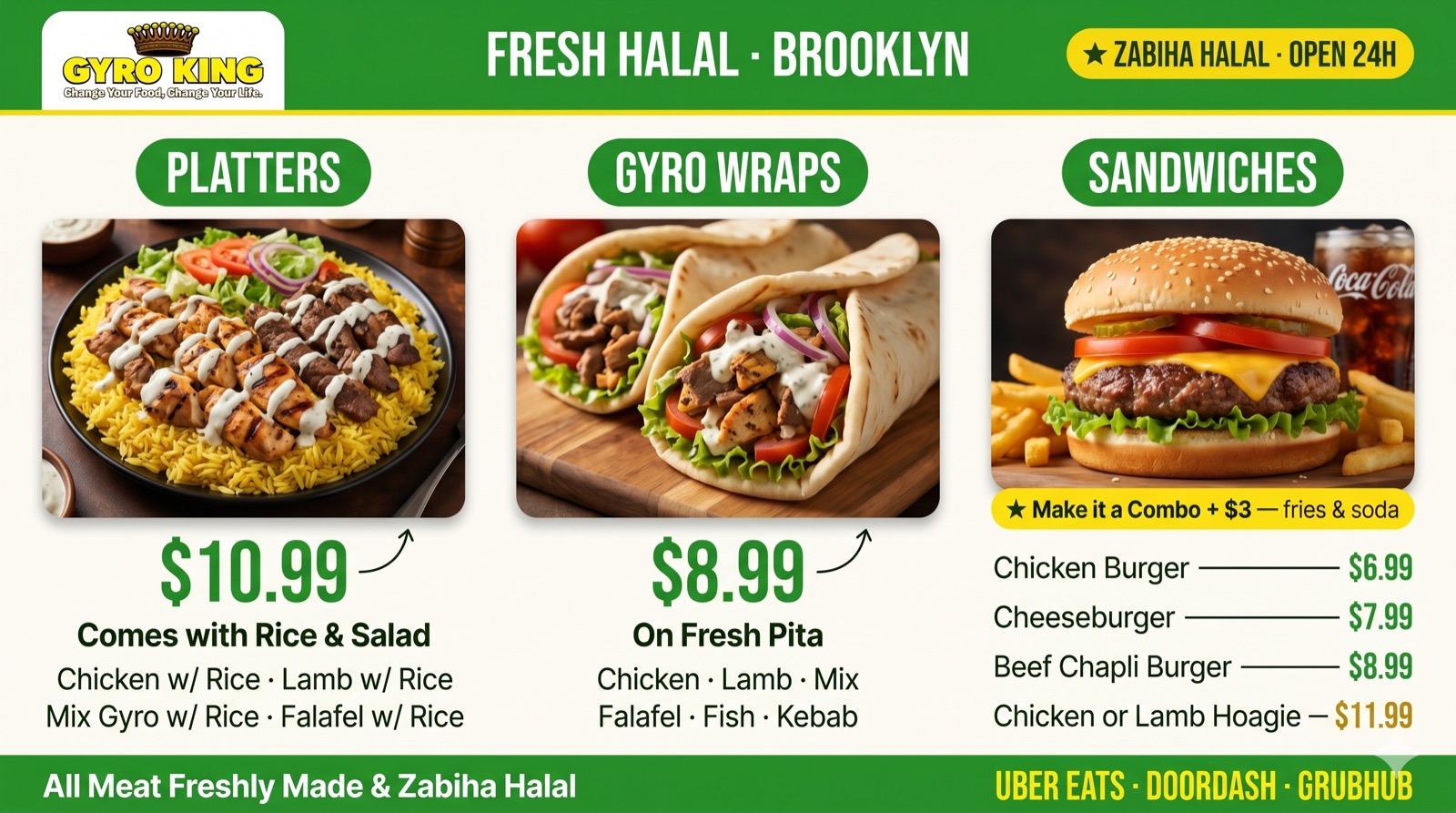
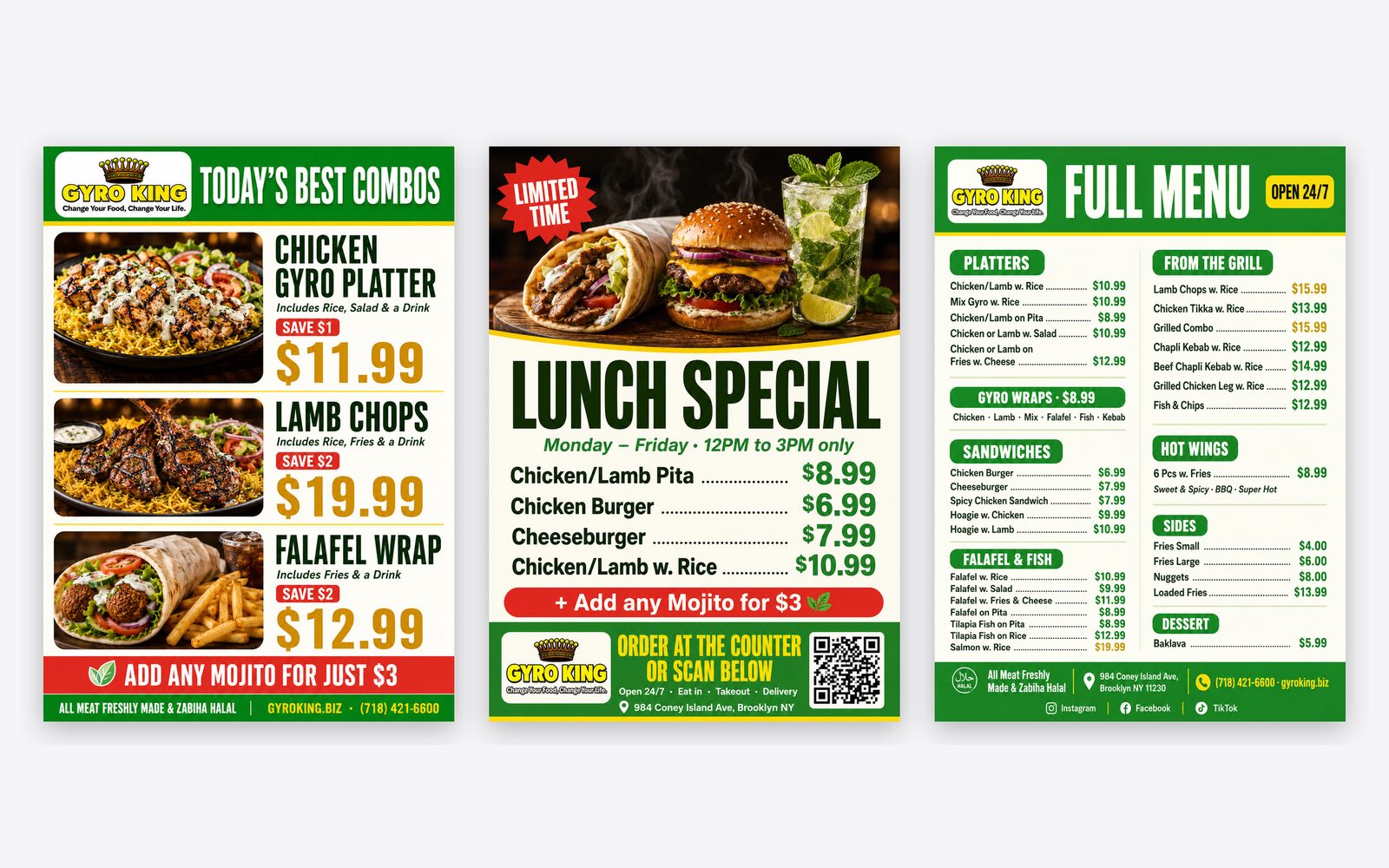
For Gyro King we designed the table tents, menu flyers, catering menu, posters, review stands and TV menu boards together, in the same green and yellow, so every piece looks like it belongs to the same restaurant.
Check before you print
- Phone number: call it straight from the proof.
- Address, including the cross street or neighborhood people search for.
- Opening hours, including late-night and holiday hours.
- Every price, checked against your register.
- Every QR code: scan it with two different phones and confirm it opens the right page.
- Spelling of every dish name.
- Halal, allergen and dietary information, accurate and current.
- Website and social handles, spelled exactly right.
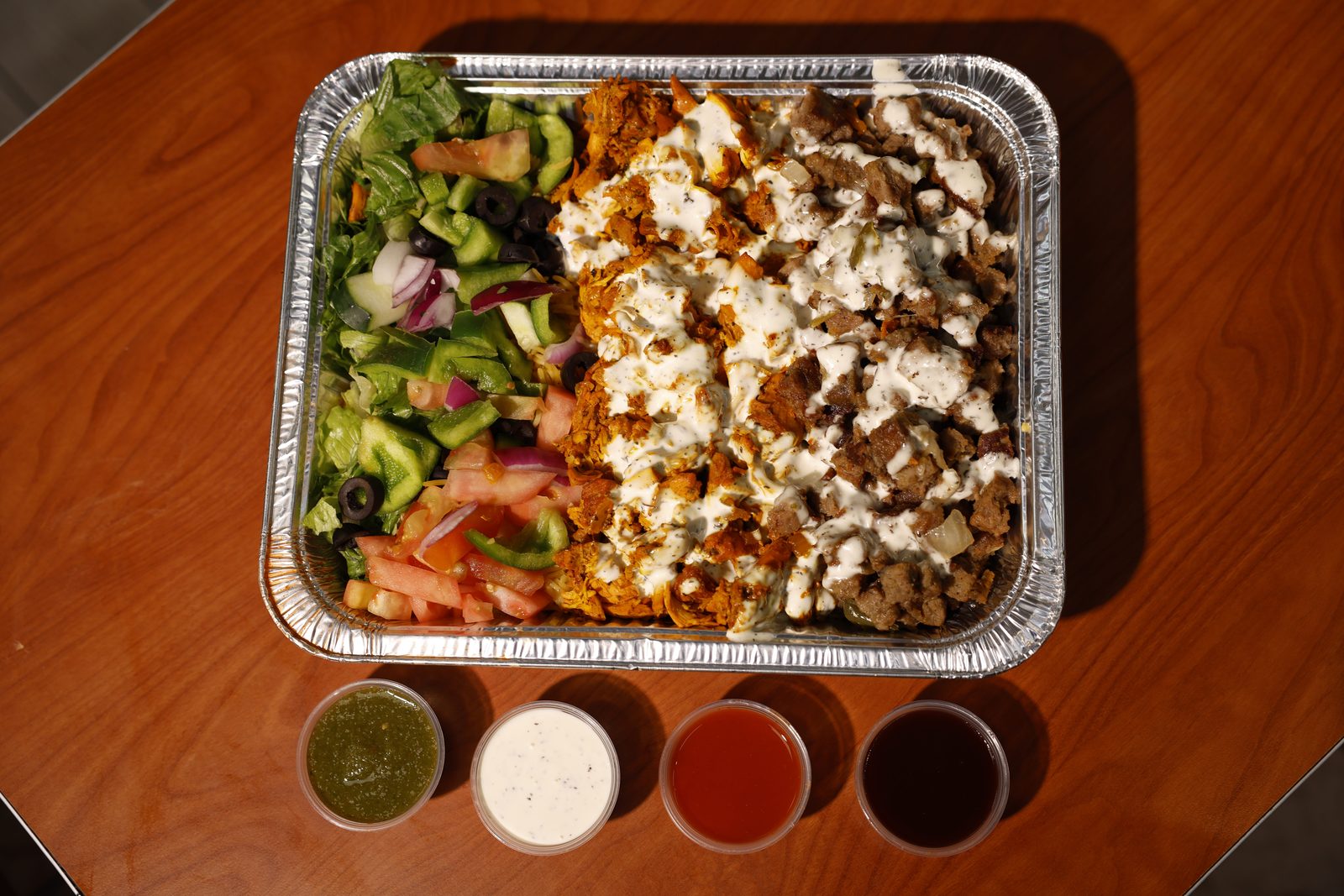
- Photos of your own dishes, not stock images that won't match what arrives on the plate.
Print one proof, read it out loud, and scan every code before you approve the full run.
Paper, finish and quantity
Pieces that get handled all day, like table tents and dine-in menus, need heavier stock and usually a laminated or coated finish so they can be wiped clean. Flyers that go out once can be lighter. Takeout menus should be thin enough to fold into a bag without fuss. Order smaller runs of anything with prices on it, because prices change, and larger runs of things that stay the same, like bag stickers and business cards.
What it all costs depends on sizes, paper and quantities, so it is worth getting a quote for the whole set at once rather than piece by piece. Our pricing page is a good starting point, or contact us with your list.
When to refresh
Reprint whenever prices or items change, and whenever pieces start to look tired. A stained or faded table tent quietly says something about the kitchen too. Once a season, walk in through the front door as if you were a customer, look at every printed piece in the room, and replace anything that is out of date, worn or no longer true.